


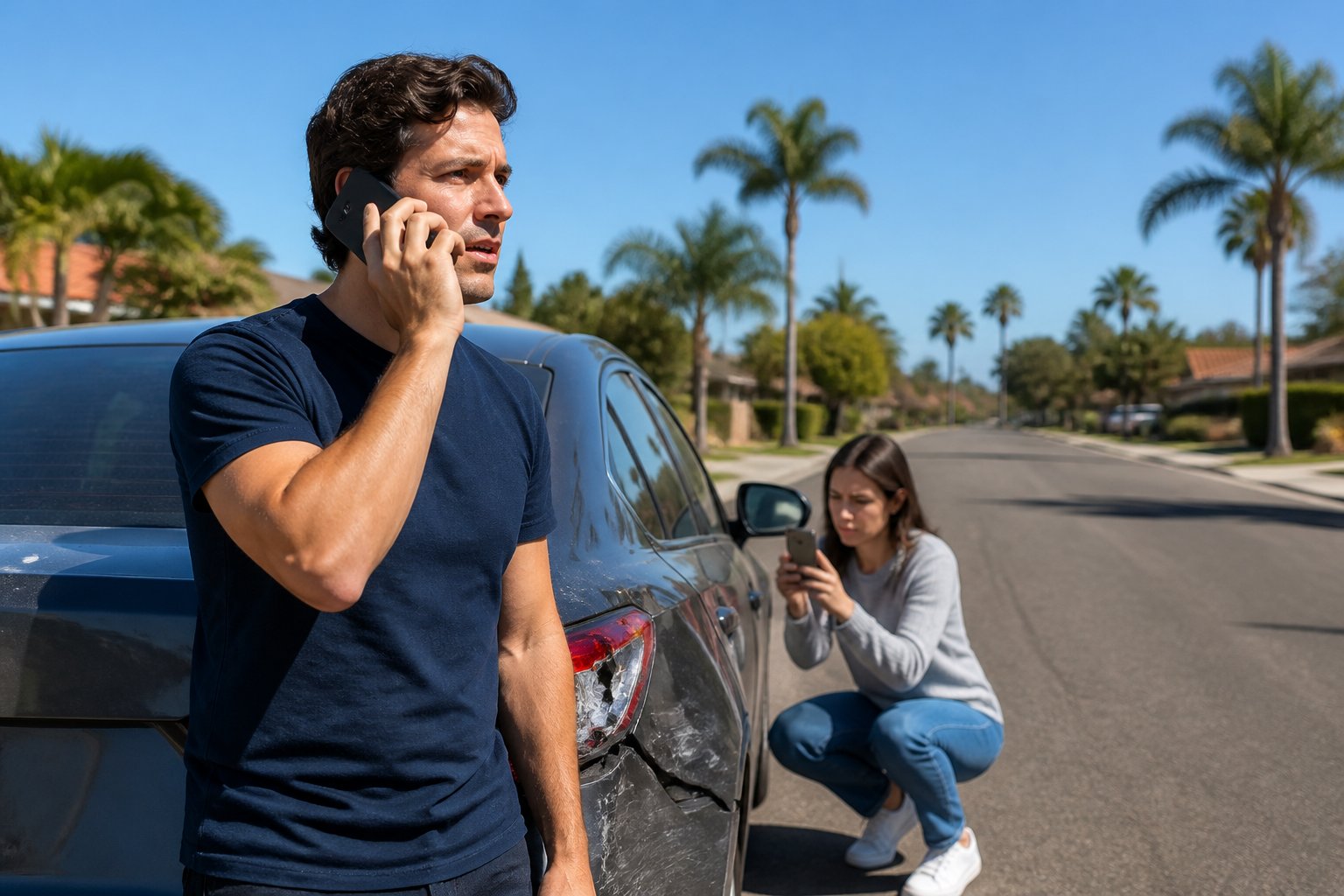

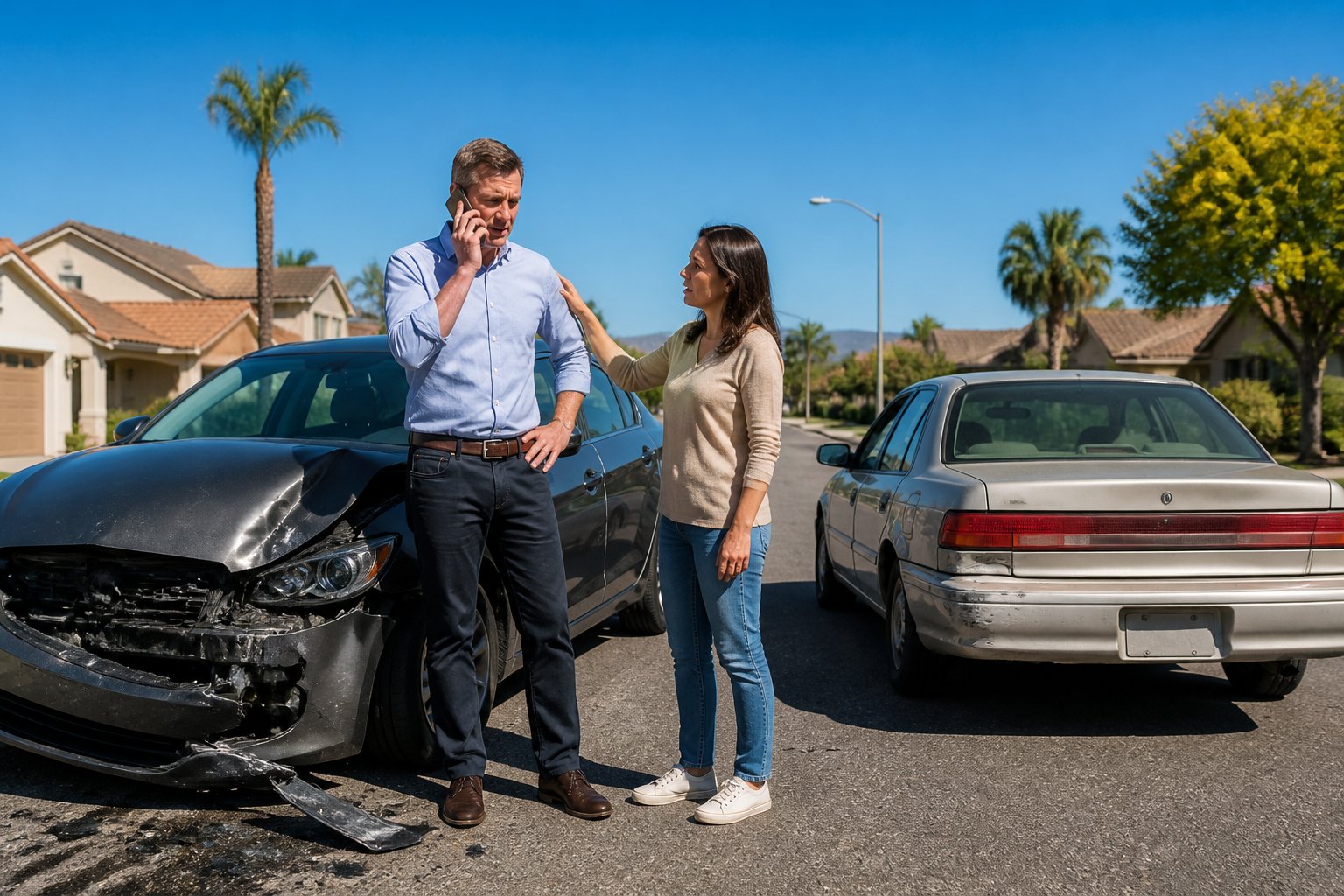
After a car accident in California, your first moves can shape your health, your insurance claim, and your legal rights. The safest path is usually simple: protect people first, document what happened, report the crash when required, and avoid quick statements that can be used against you later.
The steps you take in the first hour often matter more than what you do in the next few weeks. A careful record, prompt medical care, and restrained communication with insurers can make a real difference if your injuries turn out to be more serious than they first seem.
If the crash causes significant injuries, disputed fault, or a difficult insurance claim, a trial ready firm such as Tavakoli & Ivosevic, LLP Injury Attorneys may be the kind of help you look for. That is especially true when the other side is already treating the case like a negotiation, not a search for fairness.
Key Takeaways
- Safety comes first, then documentation.
- Report the crash when California law requires it.
- Save records before injuries and disputes grow.
Immediate Safety Priorities

Your first goal is to keep everyone safe and get help for anyone who may be hurt. Even a crash that seems minor can hide injuries, so do not rush past the basics.
Check For Injuries
Check yourself, your passengers, and the people in the other vehicle for pain, bleeding, dizziness, confusion, or trouble moving. If anyone appears injured, treat it seriously even if they say they are fine at first.
Move To A Safer Location If Possible
If the cars can be moved and it is safe to do so, pull out of traffic and turn on your hazard lights. On a busy California road, staying in the travel lane can create a second crash.
Call 911 When Emergency Help Is Needed
Call 911 right away if someone is injured, the cars are blocking traffic, or there is a serious hazard like fire, smoke, or leaking fuel. If you are unsure whether the situation counts as an emergency, making the call is usually the safer choice.
How To Document The Scene
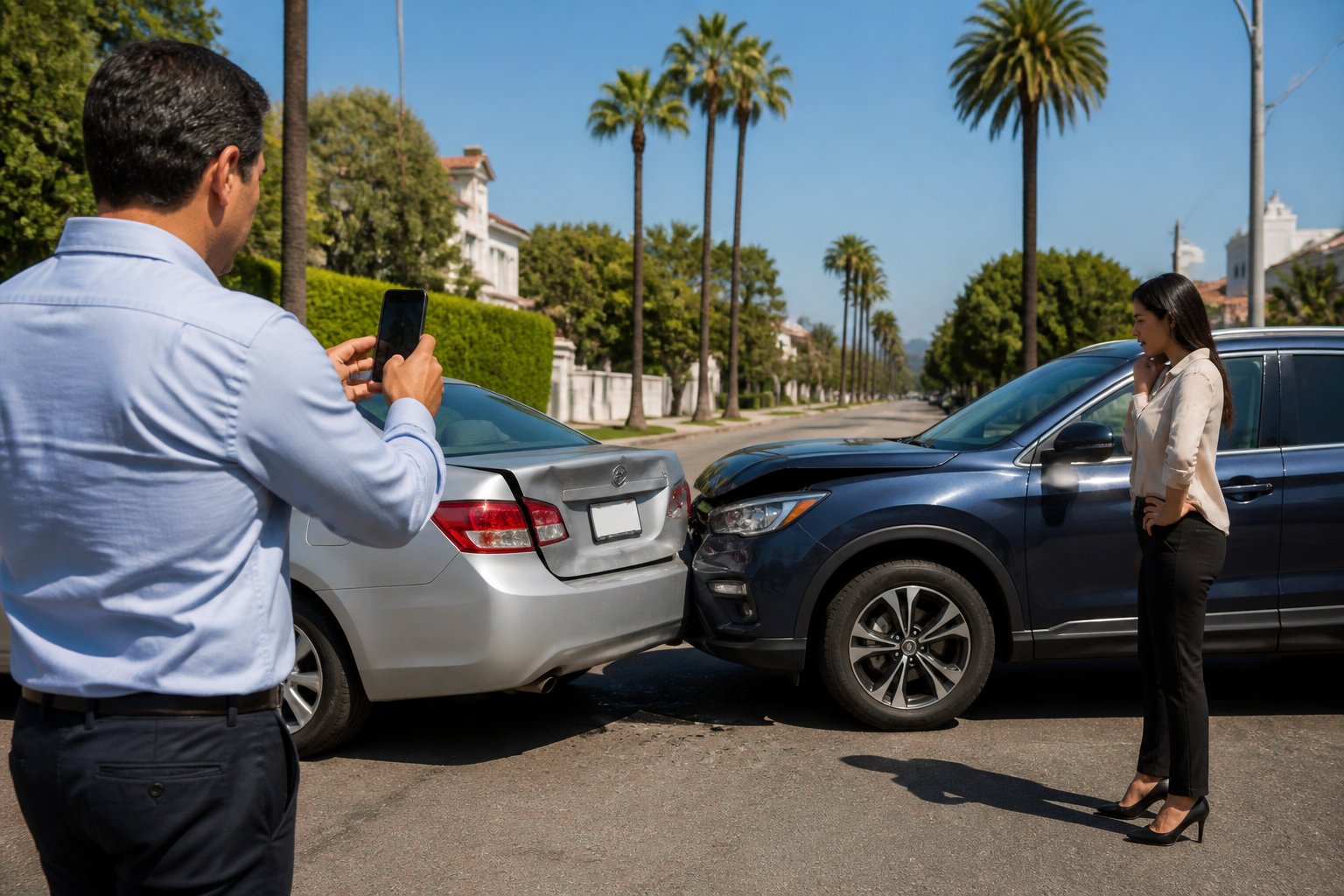
The scene can change fast, so gather details before vehicles are moved or debris is cleaned up. Clear documentation often becomes the backbone of an insurance claim later.
Exchange Information With Drivers
Get the other driver’s name, phone number, address if available, driver’s license number, license plate, insurance company, and policy number. You should also give your own basic information without guessing about fault.
Photograph Vehicles, Road Conditions, And Injuries
Take wide photos and close photos of both vehicles, skid marks, traffic signs, damage points, weather, road debris, and visible injuries. A few minutes of careful photos can preserve details that disappear by the time anyone reviews the claim.
Gather Witness Names And Contact Details
If anyone saw the crash, ask for their name and phone number before they leave. Neutral witnesses can matter a great deal when drivers disagree about what happened.
California Reporting Requirements
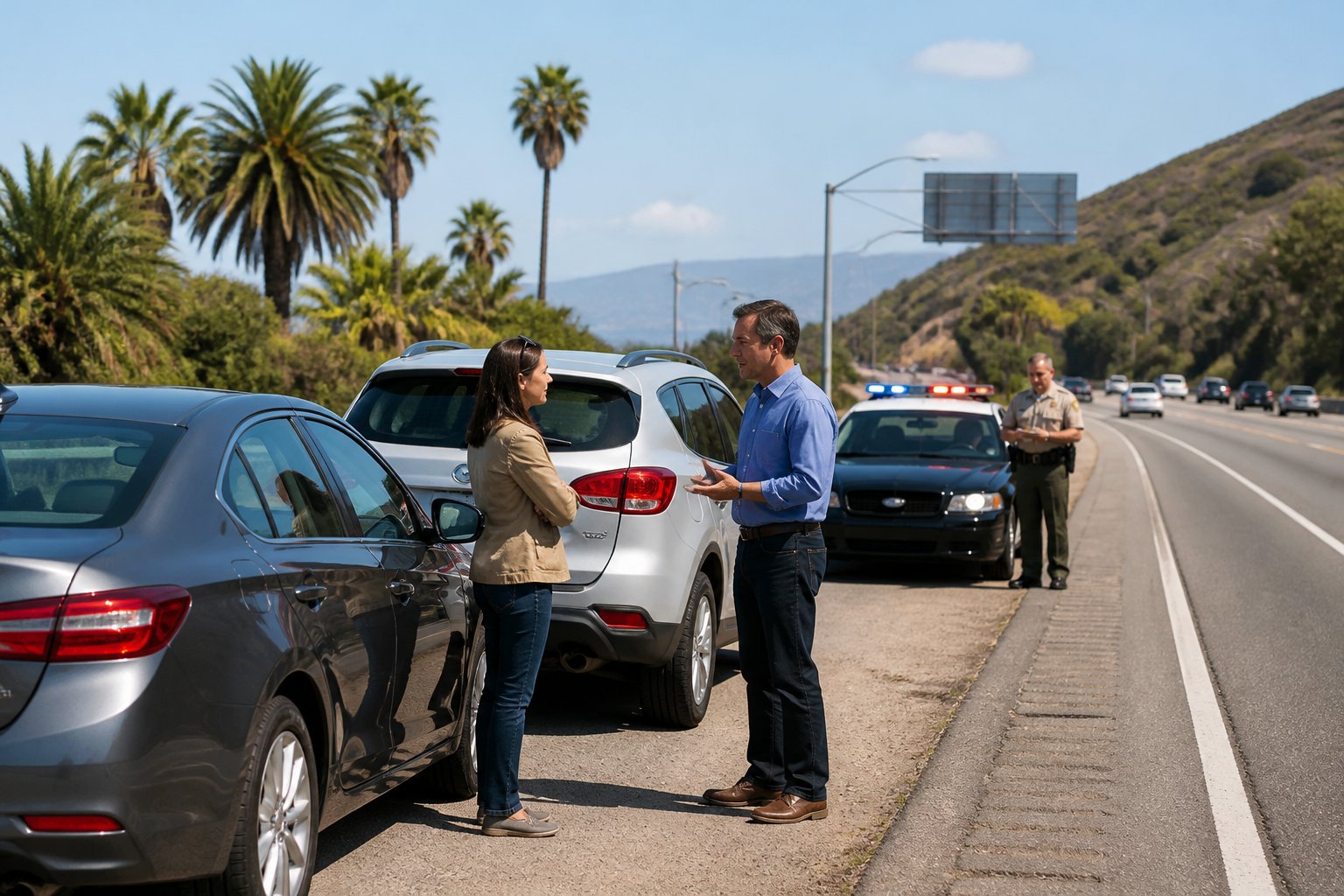
California has reporting rules that can apply even when the damage seems limited. You want to know which report is required so you do not create avoidable problems later.
When To Report The Crash To Police
If anyone is injured or killed, you should report the crash to local police or the California Highway Patrol as soon as possible. Even a small injury can trigger reporting duties, so do not assume the crash is too minor to mention.
When To File An SR 1 With The DMV
You may need to file an SR 1 with the California DMV if there is an injury, a death, or property damage that appears to be more than $1,000. This filing is separate from a police report and is often due within 10 days.
Why Timely Reporting Matters
Prompt reporting can protect your driving record and help show that you took the crash seriously from the start. Delays can raise questions, especially when injuries show up later or fault is disputed.
Medical Care And Injury Records
Get checked by a doctor as soon as you can, even if you think your pain is manageable. Many crash injuries, including neck, back, head, and soft tissue injuries, get worse after the adrenaline fades.
Get Prompt Evaluation Even For Delayed Symptoms
If you feel sore, dizzy, nauseated, or foggy later in the day, get medical care quickly. A delay between the crash and treatment can make it easier for an insurer to argue that something else caused the injury.
Follow Treatment Recommendations
Follow through on exams, referrals, physical therapy, medication instructions, and follow up visits. When you skip treatment, the insurance company may argue that your injury was not serious.
Keep Bills, Records, And Work Loss Documentation
Save discharge papers, test results, prescriptions, receipts, and notes about missed work. These records help show both the cost of care and the real effect the crash had on your daily life.
Dealing With Insurance Companies
Insurance calls often start fast, sometimes before you have even seen a doctor. Stay careful, because the first version of events can shape how the claim is handled.
Notify Your Insurer Carefully
Report the crash to your insurer, but keep your facts short and accurate. Give the date, location, people involved, and basic facts, then stop before you speculate about speed, fault, or injuries.
Be Cautious With Recorded Statements
An adjuster may ask for a recorded statement. You should be careful here, because casual wording can be used later to challenge your claim or minimize your injuries.
Review Settlement Offers Before Accepting
Do not accept an early settlement until you know the full extent of your injuries and losses. Once you sign away your claim, you may not be able to ask for more money later if treatment continues.
When Legal Guidance May Help
Some crashes need more than insurance paperwork. When injuries are serious or fault is unclear, legal help can protect evidence and improve your position before the other side controls the narrative.
Cases Involving Serious Injuries Or Fault Disputes
If you have broken bones, head trauma, long treatment, or a dispute over who caused the crash, you may need legal help early. Those cases often involve larger losses and more aggressive insurer pushback.
How Evidence Preservation Affects Leverage
Photos, vehicle inspections, witness statements, medical records, and electronic data can fade or disappear quickly. Strong preservation early on can give you more leverage when settlement talks begin.
What To Look For In A California Car Accident Lawyer
Look for a lawyer who treats the case like it may need to be tried, not just settled fast. A firm that prepares thoroughly, focuses on serious injuries, and does not settle cheap can be a better fit when your recovery depends on full compensation.
Frequently Asked Questions
What information should I exchange with the other driver at the scene?
You should exchange names, contact details, driver’s license numbers, license plate numbers, and insurance information. If possible, also note the vehicle make, model, color, and the location of the crash.
When should I call the police and file an accident report?
Call the police when someone is injured, the road is blocked, or the crash involves a serious hazard. In California, you may also need to file an SR 1 with the DMV if there is injury, death, or property damage that appears to be over $1,000.
What steps should I take if the accident was not my fault?
Document the scene, get witness information, seek medical care, and avoid admitting fault. Even when you believe the other driver caused the crash, you still need to protect the evidence and communicate carefully with insurers.
What should I do after a minor collision with little visible damage?
Do not ignore it just because the damage looks small. Take photos, exchange information, check for delayed pain, and consider medical care if you feel off later, since some injuries show up hours or days after the impact.
How do I handle a hit and run accident and report it properly?
Call the police right away and give them every detail you can remember, including the other vehicle’s color, direction of travel, and license plate if you saw it. Take photos of the scene and your damage, then notify your insurer as soon as practical.
What should I do next with insurance and medical documentation after the crash?
Keep every bill, visit summary, prescription, and work note in one place, and write down how your injuries affect daily tasks. When speaking with insurance, stick to basic facts until you know the full scope of your treatment and losses.